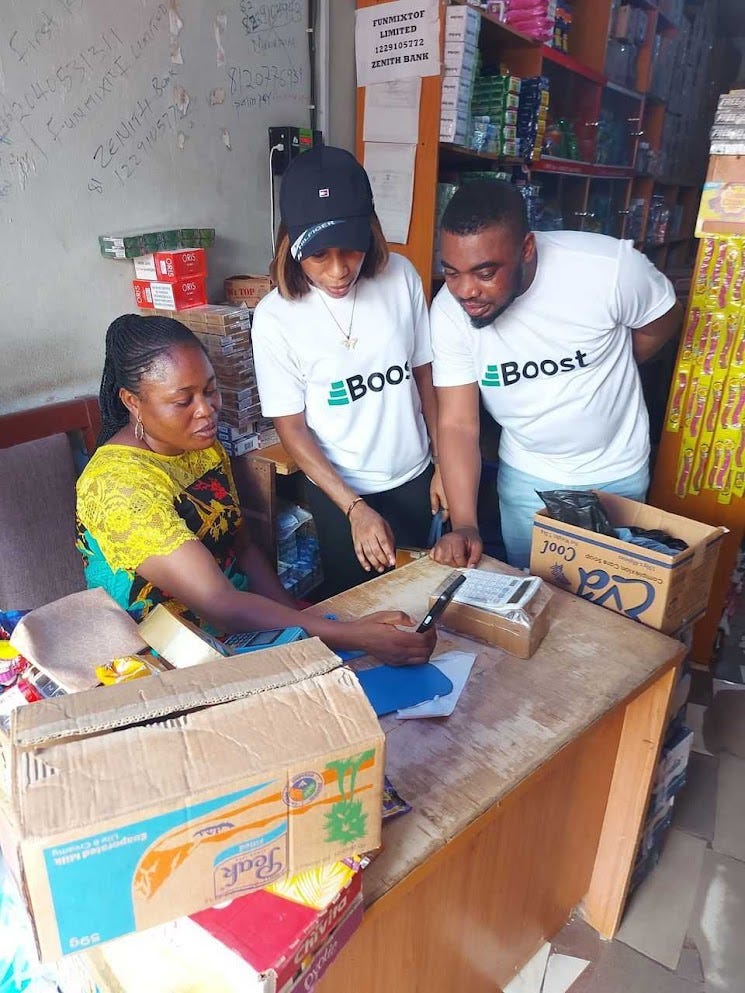
In Nigeria, 90% of retail happens in the informal market. Yet for most manufacturers, this remains a blind spot. Once goods leave the warehouse, the data stream goes cold.
👉 No real-time inventory | No demand signals | No last-mile intelligence.
In a volatile economy defined by FX swings and shrinking margins, “running blind” is a direct drain on your bottom line.
Revenue Leakage: Manual, unmonitored processes result in an average 30% loss of potential margin.
Inventory Gaps: Sales are frequently lost because you cannot see last-mile demand in real time.
Carrying Costs: Reactive ordering cycles inflate inventory costs by as much as 25%.
The Myth: Digitization is a Disruptive Overhaul 👉 We often assume last-mile tech requires massive IT restructuring. The reality? If technology complicates the natural flow of trade, the market will simply not adopt it.
The Reality: Boost powers growth with Radically Easy ordering. If it isn’t as simple as a WhatsApp message, it won’t scale. We don’t just offer software; we offer a 30% recovery of your leaked margin. When you lower the barrier to entry, adoption becomes your greatest commercial multiplier.
Manual distribution is no longer a sustainable model; it’s a capital risk. The manufacturers who lead the next decade will be those who finally get visibility at the last mile.
*In Part 2, we’ll demonstrate how digitizing the sub-distributor network unlocks growth and why over 80% adoption is the difference between a digital blindspot and a digital engine.*