

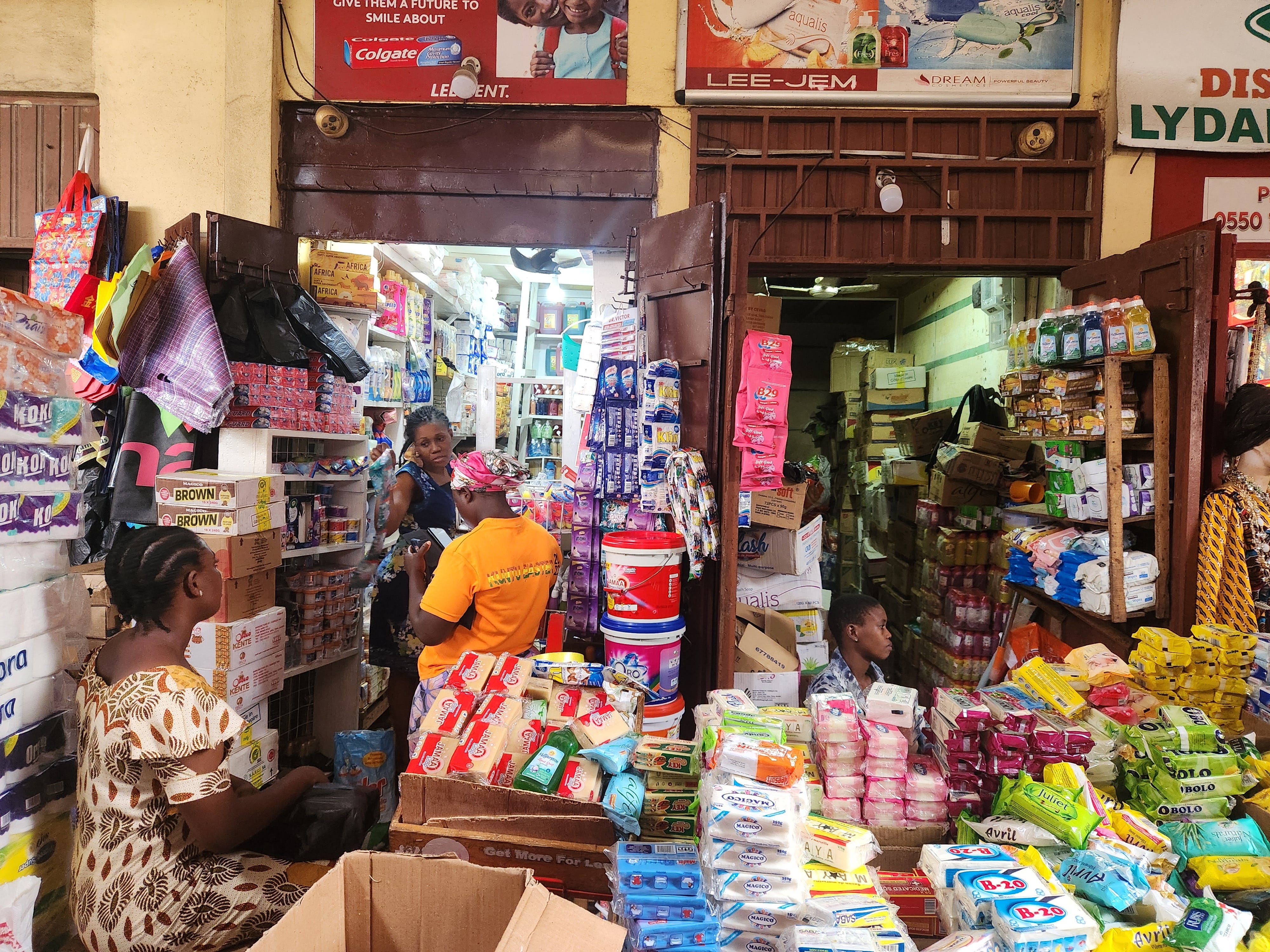
Imagine driving your supply chain across Nigeria at midnight with the headlights off. You know the destination, but you cannot see the potholes, diversions, or opportunities ahead. For many FMCG manufacturers, that is the reality of operating within informal trade networks that account for the majority of retail activity across Nigeria. Industry estimates show that nearly 90% of retail activity still happens through informal channels such as kiosks, open markets, neighborhood retailers, and wholesalers. Yet once products leave the warehouse, visibility often disappears.
Demand signals weaken, inventory decisions become reactive, and inefficiencies quietly accumulate across the network. In an economy shaped by inflationary pressure, FX volatility, rising logistics costs, and tighter margins, this lack of visibility is no longer just an operational challenge, it is a financial one.
Revenue leakage from manual processes, missed orders, stock imbalances, and inefficient inventory movement continues to cost manufacturers significant value across the last mile.
Digitizing distribution changes this dynamic.
When distributors and wholesalers have access to better visibility, simpler ordering systems, and stronger support structures, decision-making improves across the network. Orders become more predictable, stock movement becomes easier to track, and businesses are able to respond faster to customer demand.
We have seen this shift through the experience of small distribution businesses operating within informal trade markets.
In one case, a distributor managing a growing retail network was struggling with manual records, inconsistent ordering patterns, and cash flow pressure. The business was working hard, but much of its daily decision-making relied on instinct rather than visibility.
After transitioning to a more structured digital ordering process, supported by Boost’s tools alongside stronger distributor engagement and customer support, operations gradually became more efficient and predictable.
The improvement was not driven by technology alone. It came from a combination of factors:
📊Better visibility into ordering patterns
📊Faster and more consistent customer support
📊Easier product access and replenishment
✅ Incentive structures that encouraged repeat ordering
✅ Stronger relationships between distributors and customers
✅ More confidence in planning inventory and cash flow
Over time, the business recorded significant growth in both sales volume and operational stability. Average order sizes more than doubled over the adoption period, while monthly sales grew multiple times over as ordering became more consistent and customer engagement improved.
This reflects a broader lesson about digitizing informal trade: technology is most effective when it strengthens existing business relationships instead of disrupting them.
Boost was built with this in mind. By designing for ease of use, partners are able to onboard quickly and begin transacting without extensive training or operational disruption. The result is not just better administration, but stronger visibility, faster coordination, and more responsive distribution networks.
The manufacturers that will lead the next decade will not necessarily be the ones moving the most volume, but the ones that can see, understand, and respond to their markets in real time.
Because when visibility improves across the last mile, growth becomes easier to sustain, not just easier to chase.
Follow the conversation on LinkedIn!
Part 1: https://lnkd.in/dnb5tN-K
Part 2: https://lnkd.in/ddNdg4XF
Part 3: https://lnkd.in/eFVy-bMj
#FMCG #NigeriaBusiness #SupplyChainROI #BoostTechnology #CapitalEfficiency #LastMileVisibility